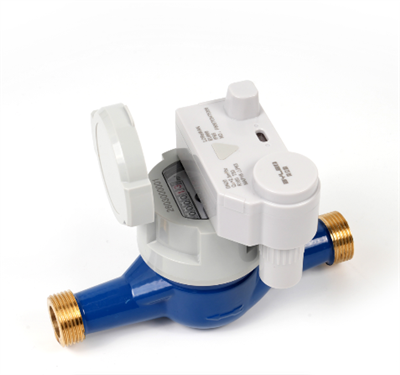
A photoelectric direct-reading meter is designed by printing specific markings on the outer rim of the 0–9 digits on the counter wheels of a standard water meter, while mounting photoelectric sensors and associated circuitry around the periphery. When an external power source is applied to read the meter, the photoelectric sensors detect the "presence" or "absence" status of these specific markings; by interpreting the resulting encoded combinations, the precise numerical reading of the counter wheels is determined.
Key Features of Photoelectric Direct-Reading Remote Water Meters:
1. Direct Reading of Counter Values: The meter directly reads the digits displayed on the mechanical counter wheels-known as the "window value." Consequently, there is no need to configure internal parameters such as base readings or constants, nor is there a need for internal data storage. This eliminates cumulative errors, thereby achieving true "direct reading" of the meter and bringing an end to the historical reliance on pulse accumulation and numerical conversion. Furthermore, the electronic components of the direct-reading meter are mechanically isolated and completely separated from the internal counter mechanism, ensuring that metering accuracy remains unaffected.
2. Direct Data Transmission: The direct-reading remote meter transmits actual numerical data rather than pulse signals. It is not only immune to the effects of mechanical vibration but also possesses exceptional resistance to electromagnetic interference, thereby ensuring stable, accurate, and reliable metering performance even in complex operating environments.
3. Passive Operation (No Daily Power Required): The direct-reading remote meter requires no external power supply during its daily operation. This represents a revolutionary technological advancement, as it prevents metering errors and significantly reduces maintenance workload-issues often associated with unstable power supplies or power failures.
4. Accurate Reading Under Reverse Flow Conditions: Since the direct-reading remote meter captures the physical position of the mechanical counter wheels (rather than counting pulses), the recorded meter reading remains consistent with the actual reading displayed on the primary mechanical meter, even in instances where reverse water flow occurs.